
Small Group Strength Training in West Hollywood
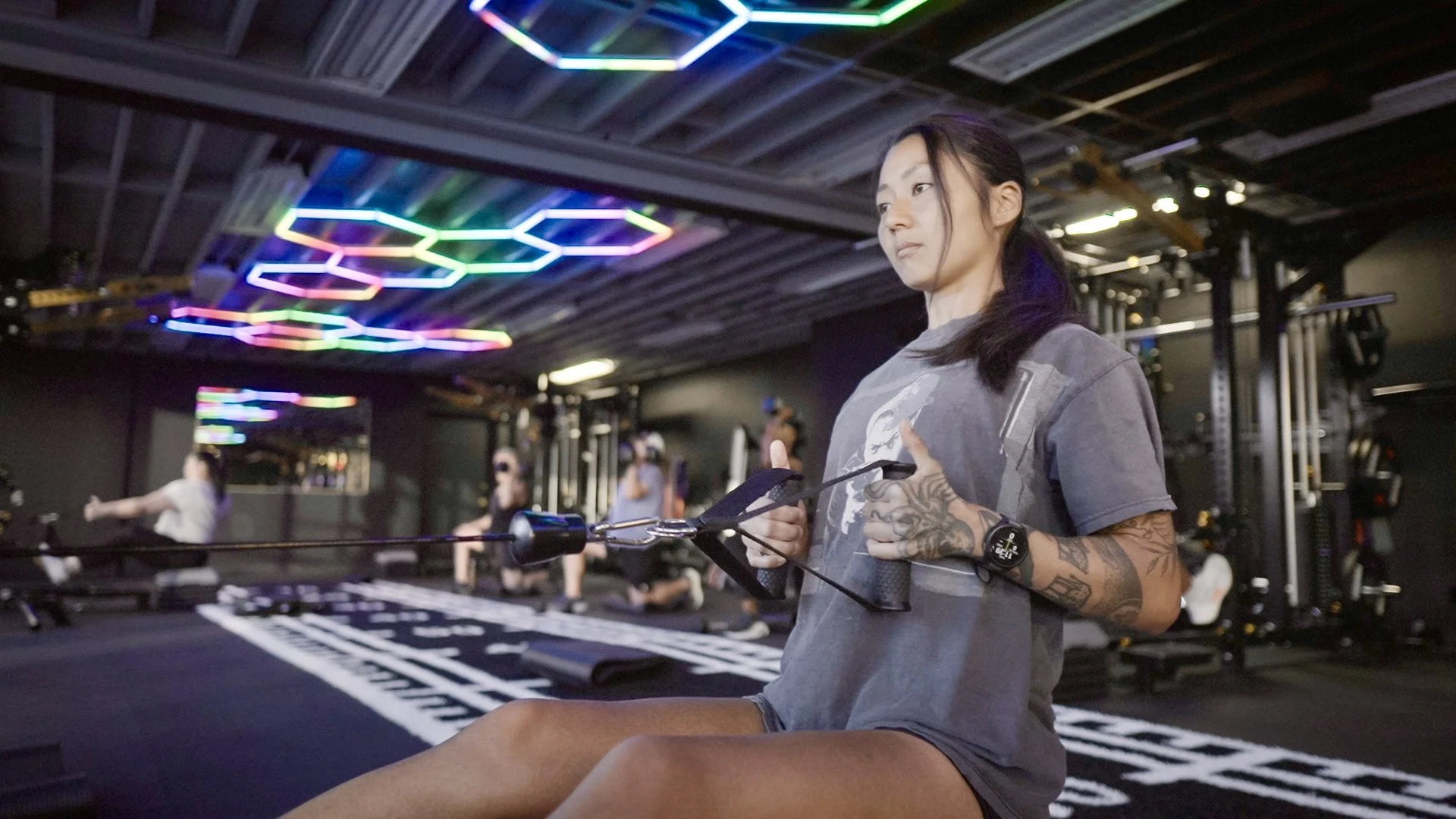
Our small group strength training sessions combine the structure of personal training with the energy of group workouts. Classes are intentionally capped to maintain coaching quality and ensure every participant receives guidance
This is not a packed class.
This is coached strength training in a controlled setting.
Our small group strength training program focuses on:
• Form
• Execution
• Progressive overload
• Sustainable results
-
Limited group size
Direct coaching and corrections
PT-informed programming
Structured weekly focus
Every session has purpose. No random circuits.
-
Beginners learning foundations
Lifters refining technique
Professionals who value efficiency
Anyone tired of crowded gyms
Claim your intro pack.
3 classes
For $55
SCHEDULE:
-
Hinge Mechanics Training
Times:
7:05am
-
Lifting Foundation Protocol
Deadlift • Hip Hinge • Posterior Oblique Sling • Body Mechanics Reeducation
The Lifting Foundation Protocol is a structured strength and movement-reeducation program designed to teach the fundamental body mechanics required for safe, efficient, and powerful lifting.
Built around the hip hinge and deadlift movement pattern, the program develops the mobility, muscular strength, trunk stability, and movement awareness necessary to lift from the ground while improving how forces are distributed through the hips, legs, trunk, and upper body.
Rather than simply teaching someone to deadlift heavier, the protocol first teaches the body how to lift correctly.
The emphasis is on understanding how to hinge through the hips, stabilize the spine, engage the posterior chain, connect the lats to the pelvis, and generate force through the legs and glutes before progressing load.
This creates a foundation for better lifting mechanics while reinforcing movement strategies intended to reduce unnecessary stress on the lower back, knees, and shoulders.
The Hip Hinge: Relearning How to Lift
The hip hinge is one of the body’s fundamental movement patterns. It is used during deadlifting, picking objects up from the floor, bending, carrying, jumping, running, and many everyday activities.
Proper hinging requires the hips to move backward while the trunk remains controlled and the spine maintains an appropriate position.
The goal is to teach the body to distribute the demands of lifting through the hips, glutes, hamstrings, legs, core, and back musculature rather than relying excessively on the lumbar spine.
The Lifting Foundation Protocol progressively reinforces:
Hip-dominant movement instead of excessive spinal bending
Controlled hip flexion and extension
Proper foot pressure and lower-body stability
Hamstring mobility and posterior-chain control
Glute activation and hip-extension strength
Abdominal bracing and spinal control
Lat engagement and upper-back stability
Load positioning relative to the body’s center of mass
Controlled force production from the ground through the hips
Safe progression from movement competency to resistance
The objective is to make good lifting mechanics repeatable, not something an individual has to consciously reconstruct every time they pick up a weight.
Posterior Oblique Sling Integration
A major component of the protocol is developing the Posterior Oblique Sling (POS).
The Posterior Oblique System creates a cross-body connection between the latissimus dorsi and opposite gluteus maximus through the thoracolumbar fascia, helping integrate the shoulder complex, trunk, pelvis, and lower extremities.
During a properly controlled hinge or deadlift, the body does not function as isolated muscles.
The lats help stabilize the upper body and maintain the relationship between the load and trunk. The abdominal and spinal stabilizers help control trunk position. The glutes and hamstrings generate hip-extension force, while the legs provide the connection to the ground.
Training these structures together creates a stronger upper-body ↔ trunk ↔ pelvis ↔ lower-body force-transfer system.
Building the Posterior Chain
The protocol develops the major muscular prerequisites necessary for efficient lifting.
The gluteus maximus becomes a primary driver of hip extension, while the hamstrings assist with hip control and posterior-chain force production.
The latissimus dorsi contributes to upper-body stability and helps maintain tension through the trunk during loaded movements.
The abdominal wall, obliques, and spinal stabilizers create the trunk stiffness necessary to control spinal position while external forces are applied.
Together, these muscles allow the hips and legs to generate force while the trunk provides a stable platform through which that force can travel.
Legs create the foundation.
Hips generate the force.
Core stabilizes the trunk.
Lats connect the upper body.
The posterior sling integrates the entire movement.Body Mechanics & Injury-Prevention Reeducation
The Lifting Foundation Protocol uses the deadlift as more than a strength exercise. It becomes a tool for body-mechanics education and movement reeducation.
Individuals learn how to recognize the difference between bending primarily through the spine and producing movement through the hips.
They develop awareness of where their weight is positioned, how their feet interact with the ground, how the pelvis moves, how the trunk is stabilized, and how the load should remain controlled throughout the movement.
This is particularly important because poor lifting strategies can repeatedly place unnecessary stress on tissues when performed under load or repeated over time.
The protocol therefore prioritizes movement quality before load progression.
The goal is not to suggest that every injury can be prevented, but to develop stronger movement strategies, improve load management, and reduce avoidable mechanical stress during lifting.
From Mobility → Stability → Strength → Load
Deadlifting is progressively developed rather than immediately introduced as a heavy compound exercise.
The protocol establishes the necessary prerequisites first:
Mobility
Develop adequate hip and hamstring mobility to access the hinge without compensating excessively through the spine.Movement Control
Learn how to separate hip movement from spinal movement and consistently reproduce the hinge pattern.Stability
Develop foot, pelvic, abdominal, spinal, and shoulder stability so the body can maintain position against external resistance.Posterior Chain Strength
Strengthen the glutes, hamstrings, lats, back extensors, and core musculature responsible for controlling and producing the movement.Sling Integration
Connect the opposite lat and glute through the Posterior Oblique System to improve cross-body stability and force transfer.Progressive Loading
Once the movement foundation is established, gradually introduce resistance while maintaining the same mechanical principles.Functional & Athletic Carryover
Developing the Posterior Oblique Sling and hip hinge has applications beyond deadlifting.
A stronger posterior system contributes to:
Hip extension power for running, jumping, and acceleration
Cross-body force transfer between the upper and lower extremities
Anti-rotation trunk control during loaded and athletic movements
Gait and stride control
Pelvic stability
Posterior-chain strength
Ground-force production
Load management through the trunk and lower back
Safer and more efficient lifting strategies for everyday activities
Primary Target Areas
Latissimus Dorsi • Gluteus Maximus • Gluteus Medius • Hamstrings • Back Extensors • Core • Obliques • Deep Trunk Stabilizers • Hip Complex
Lifting Foundation Principle
Learn the Hinge. Build the Posterior Chain. Stabilize the Spine. Connect the Sling. Then Load the Movement.
The Lifting Foundation Protocol establishes deadlifting as a learned movement skill—not simply an exercise. By combining body-mechanics education, hip-hinge reeducation, posterior-chain development, core stabilization, and Posterior Oblique Sling integration, the program creates a progressive foundation for stronger, more controlled lifting.
Move correctly first. Build strength second. Add load with purpose.
-
Ground Force Training
Times:
7:05am
-
GroundForce Training is a structured strength and movement system designed to build a strong, stable, and powerful base from the ground up by integrating the legs, hips, pelvis, and abdominal system.
The foundation of nearly every athletic and functional movement begins with the body’s ability to create stability against the ground. Rather than training the legs and core as separate areas, GroundForce Training teaches them to work together as one connected system—allowing the body to absorb force, stabilize the pelvis, control movement, and generate power more efficiently.
Build the Base: Hips + Abs
At the center of GroundForce Training is the relationship between the hips and abdominal system.
The glutes, hip adductors, iliopsoas, quadriceps, and hamstrings create and control force through the lower body, while the abs and obliques stabilize the trunk and help maintain the position of the pelvis over the legs.
When these muscle groups coordinate effectively, they create a solid base through the hips and core. This provides the stability necessary for stronger squats, lunges, running, jumping, acceleration, deceleration, and changes of direction.
Ground Stabilization
GroundForce Training emphasizes the body’s ability to connect to and stabilize against the ground.
As the feet apply pressure into the floor, the leg muscles work together to control the knees and hips. The glutes and adductors stabilize the pelvis while the abdominal system controls the trunk above it. This creates a stronger connection between the ground, lower extremities, pelvis, and torso.
Instead of allowing force to be lost through excessive movement at the knees, hips, pelvis, or trunk, the program trains the body to maintain alignment while producing movement.
This improves the body’s ability to:
Create force against the ground
Absorb and control force during landing and deceleration
Stabilize the feet, knees, hips, and pelvis
Maintain a strong hip-to-core connection
Control pelvic movement under resistance
Improve lower-body alignment
Transfer force from the legs into the trunk
Develop stronger acceleration and directional movement
Hips + Abs Working Together
The Gluteus Maximus and Gluteus Medius provide hip extension, lateral stability, and pelvic control. The hip adductors stabilize the inner thigh and help control the position of the femur and pelvis.
The iliopsoas contributes to hip flexion and helps coordinate the relationship between the lumbar spine, pelvis, and lower extremities. The quadriceps and hamstrings work together to produce and control force through the knee and hip.
Above this foundation, the abs and obliques stabilize the trunk and pelvis, helping prevent unnecessary rotation, extension, or lateral movement while the legs generate force.
The result is a more integrated lower-body system where the legs create force, the hips stabilize it, and the abs control it.
Training Focus
GroundForce Training develops:
Hip and pelvic stability
Abdominal and rotational control
Glute strength and activation
Inner-thigh and adductor strength
Hip flexor strength and control
Quad and hamstring integration
Knee alignment and lower-extremity control
Single-leg stability and balance
Ground-force production
Force absorption and deceleration
Lower-body strength and power
Stronger mechanics for athletic and everyday movement
Primary Target Areas
Gluteus Maximus • Gluteus Medius • Hip Adductors • Iliopsoas • Quadriceps • Hamstrings • Abs • Obliques
GroundForce Principle
Build the Base. Stabilize the Hips. Connect the Abs. Control the Ground. Generate Force.
GroundForce Training builds the Hips + Abs foundation the body needs before adding greater speed, load, rotation, or power—creating a stronger base for everything that happens above it.
-
Forward Force Training
Times:
7:05am
11:15am
-
This integrated strength and movement program combines the Anterior Oblique Sling (AOS) with the Shoulder–Arm Line System to improve posture, upper-body strength, rotational control, pelvic stability, and efficient force transfer throughout the body.
The program trains the body as a connected system rather than isolating individual muscle groups. It develops the diagonal relationship between the chest, triceps, shoulders, obliques, abdominal fascia, and opposite inner thigh, while simultaneously strengthening the scapular stabilizers, rotator cuff, mid-back, and postural muscles that control the shoulder complex.
The Anterior Oblique Sling creates a diagonal force pathway across the front of the body. The pectoralis major and triceps help generate pushing force while the internal and external obliques control trunk rotation and stabilize the core. The opposite adductor and inner-hip musculature anchor the pelvis, helping transfer force between the upper and lower body. This coordination is important for movements involving pushing, sprinting, cutting, rotation, and directional changes.
At the same time, the Shoulder–Arm Line System focuses on restoring and maintaining proper alignment of the spine, scapula, and shoulder joint. Postural corrective exercises (CRX), scapular stabilization, rotator-cuff strengthening, and controlled shoulder mobility help address forward-rounded posture, poor shoulder mechanics, and instability. This creates a stronger foundation for both pushing and pulling movements while allowing the arms to generate force without sacrificing shoulder position or trunk control.
The program also incorporates the hip flexors, hip adductors, Quadratus Lumborum (QL), and core to reinforce the connection between the pelvis and upper body. These structures help stabilize the trunk and pelvis as force travels through the diagonal sling and into the shoulder and arm.
Together, these systems teach the body to align, stabilize, rotate, push, and transfer force as one coordinated unit. The goal is to build stronger movement mechanics, improve posture and joint control, enhance athletic performance, and reduce unnecessary stress on the shoulders, spine, hips, and knees.
Training Focus
Postural correction and spinal alignment
Scapular and shoulder stability
Controlled shoulder mobility
Chest, shoulder, and triceps strength
Core and rotational control
Pelvic stability and knee alignment
Opposite-side adductor and inner-thigh integration
Efficient pushing and pulling mechanics
Cross-body force transfer
Athletic rotation and directional movement
Injury-risk reduction through improved movement mechanics
Primary Target Areas:
Chest • Triceps • Posterior Deltoids • Rotator Cuff • Scapular Stabilizers • Mid-Back • Obliques • Core • Hip Flexors • Hip Adductors/Inner Thigh • Quadratus Lumborum (QL)Program Principle:
Align the posture. Stabilize the shoulder and pelvis. Connect the core. Generate force through the entire system.